
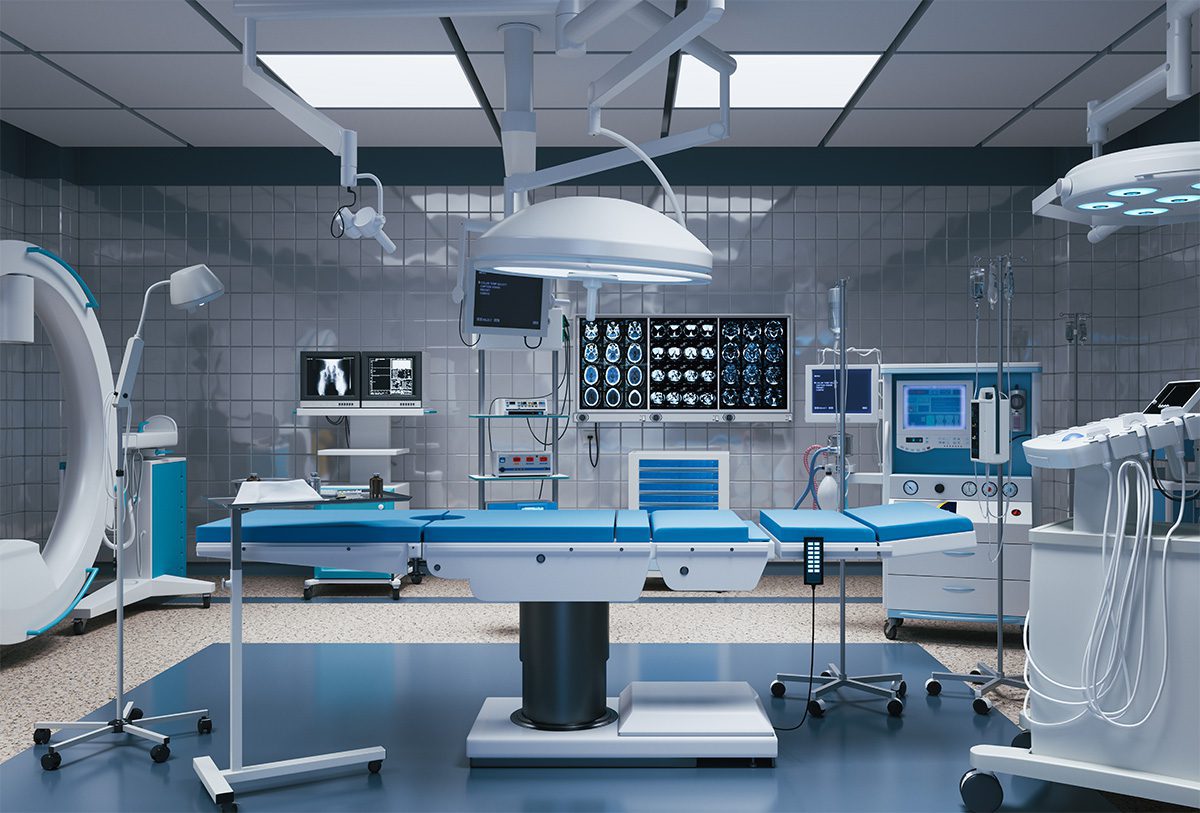
In the operating room, every surface and system affects sterility, workflow, and patient safety. While ceilings are often overlooked, they play a central role in controlling airflow, ensures compliance with ASHRAE 170, supporting surgical technology, and maintaining a cleanable environment. That is why hospitals are increasingly adopting modular operating room ceiling systems as part of modern surgical suite design. Unlike conventional field-built construction, modular ceilings are engineered as a single, coordinated system that combine infection control, utilities, lighting support, and long-term adaptability into one overhead platform.
More than Concealing Utilities
A well-designed sterile operating room ceiling should do far more than concealing utilities, as it also influences airflow performance, infection prevention, maintenance access, and equipment coordination. Poorly planned ceilings can disrupt laminar airflow, may not be compliant with ASHRAE 170, introduce hard-to-clean conditions, and complicate future upgrades. By contrast, modular systems integrate key components such as laminar diffusers, HEPA filtration interfaces, lighting supports, booms, electrical pathways, and medical gas infrastructure within a prefabricated assembly. Off-site fabrication also improves quality control, reduces installation variability, and shortens on-site construction time.
Designing for Sterility and Infection Control
Infection prevention is one of the primary drivers behind modern surgical ceiling design. Operating room ceilings must support airflow systems that continuously remove airborne contaminants while maintaining a controlled sterile field around the patient. Modular ceiling systems are especially valuable because they are designed for hygienic performance. Smooth, non-porous surfaces, sealed panel connections, flush-mounted components, and minimal exposed hardware help reduce places where contaminants can collect. Just as important, these systems support consistent downward airflow across the sterile field. Because lighting, booms, and other overhead elements are coordinated within the same engineered system, hospitals can minimize turbulence and maintain better airflow uniformity over the patient and surgical team.
Flexibility for Future Upgrades
Healthcare technology evolves rapidly, and operating rooms must adapt accordingly. One of the biggest advantages of modular OR ceiling systems is long-term flexibility. By organizing structure and utility pathways in advance, modular systems reduce clashes during installation and create cleaner access for maintenance. They also make future renovations easier, allowing facilities to add equipment or reconfigure infrastructure with less demolition, less downtime, and lower disruption to active clinical operations.
Speed and Predictability
Construction inside active hospitals presents unique challenges. Noise, dust, and operational disruptions can negatively impact patient care and hospital efficiency.
Modular ceiling systems address these concerns by shifting much of the fabrication process off-site. Once delivered, the ceiling components can be installed rapidly with minimal disruption to surrounding areas. The result is a more efficient path to a high-performance operating room that supports sterility, advanced technology, and long-term flexibility.
GBHLS on Standby
GBHLS helps healthcare facilities bring these goals together through modular OR ceiling systems designed for the realities of modern surgical care. Get in touch to discuss your next OR project.