
Frequently Asked Questions
Modular interior systems help healthcare facilities build, renovate, and adapt with greater speed, efficiency, and flexibility. Explore our FAQs to learn how our integrated ceiling, wall, and headwall solutions improve project delivery and long-term performance.
General Systems Questions
What are modular healthcare interior systems?
Modular healthcare interior systems are prefabricated, factory‑built components—such as ceilings, walls, headwalls, and pods—designed to be installed quickly on site. These systems integrate structure, utilities, finishes, and access into coordinated assemblies that reduce construction time, improve quality, and support long‑term flexibility.
How are modular systems different from traditional construction?
Traditional healthcare construction relies on field installation by multiple trades working sequentially. Modular systems are coordinated, engineered, and assembled off site, reducing trade stacking, installation time, and coordination risk while improving consistency and cleanliness.
Are modular systems suitable for hospitals and surgical environments?
Yes. Modular systems are widely used in hospitals, operating rooms, ICUs, and patient rooms because they support infection control, fast installation, and precise coordination—critical requirements in healthcare environments.
Operating Room Ceilings
What is a modular operating room ceiling system?
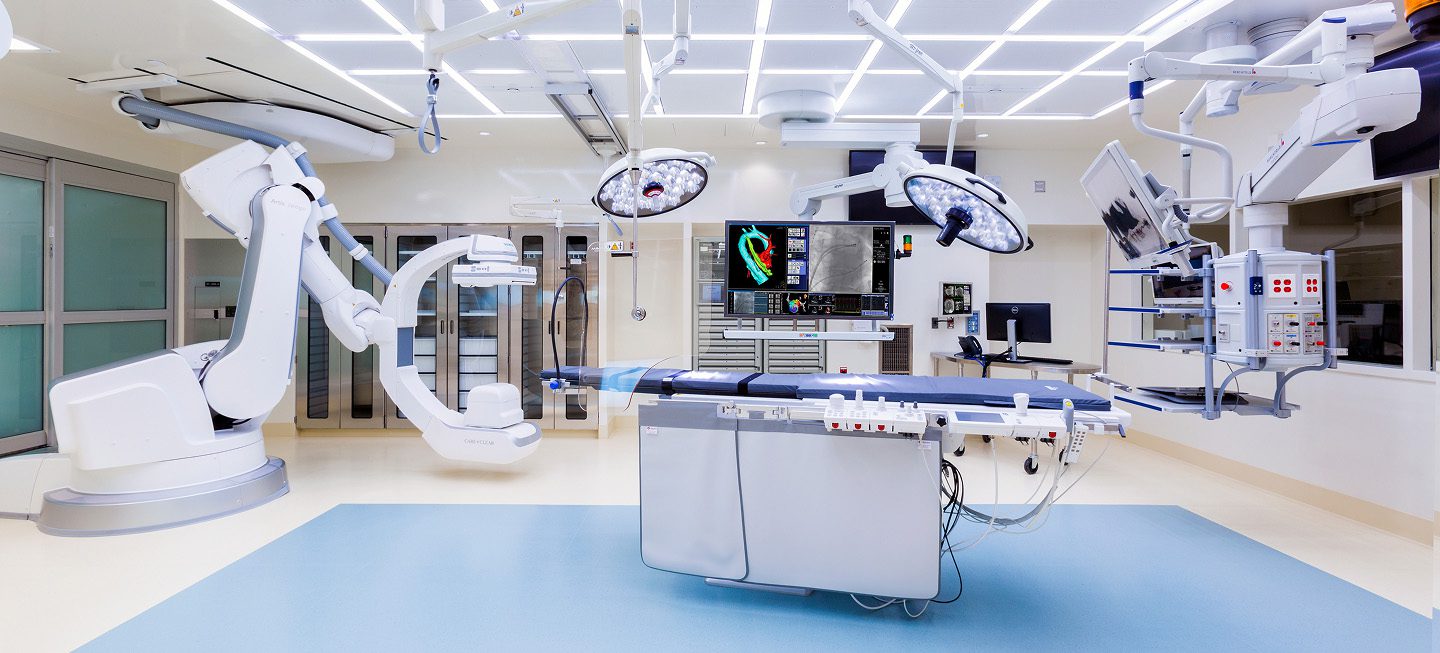
A modular OR ceiling system is a prefabricated ceiling assembly that integrates structural support, airflow distribution, lighting, and coordinated connection points into a single system. These ceilings are designed to support surgical equipment while meeting clinical airflow and infection‑control needs.
Are modular OR ceilings suitable for active hospitals?
Yes. Modular OR ceilings are especially well suited for active hospitals because they reduce on‑site work, dust, and noise, enabling OR renovations without shutting down neighboring spaces.
Do modular OR ceilings support laminar airflow and infection control?
Yes. Most modular OR ceiling systems are designed to support laminar or unidirectional airflow, HEPA filtration, and compliance with applicable ventilation standards, reducing turbulence and contamination risk over the surgical field.
Can modular OR ceilings support lights, booms, and imaging equipment?
Yes. Modular OR ceilings can be structural or non‑structural, depending on project needs. Structural systems integrate load‑bearing support for surgical lights, booms, and imaging equipment, reducing the need for complex overhead steel coordination.
Are modular OR ceilings compatible with different equipment manufacturers?
Many systems are vendor‑neutral, allowing facilities to select lights, booms, and devices from multiple manufacturers while maintaining a coordinated ceiling infrastructure.
Operating Room Wall Systems
What is a modular operating room wall system?
A modular OR wall system is a factory‑built wall assembly engineered for surgical environments. These systems typically feature sealed, non‑porous surfaces, integrated support for devices, and planned access for utilities and future upgrades.
How do modular OR walls improve infection control?
Modular OR walls use smooth, sealed, cleanable surfaces with fewer joints and penetrations than traditional drywall construction. This reduces areas where dust and contaminants can collect and supports terminal‑cleaning protocols.
Can modular OR wall systems be used in renovations?
Yes. Modular wall systems are ideal for renovations, especially in active hospitals, because they install faster and generate less disruption than stick‑built walls.
Should OR walls and ceilings be designed together?
Yes. Walls and ceilings perform best when designed as a single interior system. Coordinated design reduces clashes, improves airflow continuity, and lowers construction risk.
Hospital Headwall Systems
What is a hospital headwall system?
A hospital headwall system is a prefabricated or modular wall assembly installed at the patient bedside that integrates medical gases, electrical power, data, nurse call, and equipment mounting into a single, coordinated unit.
Where are hospital headwalls typically used?
Hospital headwalls are commonly used in:
- Patient rooms
- ICUs and critical care units
- Emergency departments
- Labor & delivery suites
- Specialty care areas
How are modular headwalls different from traditional stick‑built walls?
Modular headwalls are factory‑built and coordinated in advance, resulting in faster installation, reduced field labor, improved cleanability, and better long‑term access compared to traditional drywall construction.
Are hospital headwalls customizable?
Yes. Headwall systems can be customized based on room layout, department needs, equipment requirements, and aesthetic preferences, while still maintaining standardized infrastructure.
Patient Rooms & Interior Systems
What are modular patient room interior systems?
Modular patient room systems integrate headwalls, walls, ceilings, and utilities into coordinated assemblies. These systems support faster construction, consistent quality, and easier future modifications.
Do modular patient room systems improve maintenance and lifecycle performance?
Yes. Modular systems often include removable panels and planned access zones, allowing maintenance and future upgrades without demolition, reducing lifecycle cost and disruption.
Active Hospitals & Renovations
Why are modular systems beneficial in active hospitals?
In active hospitals, modular systems:
- Minimize construction time and disruption
- Reduce dust and noise
- Support phased renovations
- Improve infection‑control safety during construction
These benefits often make modular systems the preferred approach for live facilities.
Can operating rooms be renovated without shutting down nearby rooms?
Yes. Modular ceilings, walls, and prefabricated systems enable phased OR renovations, allowing hospitals to upgrade rooms while maintaining adjacent operations.
Coordination, Risk & Delivery
How do modular systems reduce coordination risk?
By integrating multiple trades into a single prefabricated system, modular interiors:
- Reduce trade stacking
- Lower RFI volume
- Minimize field clashes
- Improve installation sequencing
This is especially important for ceiling‑dense OR environments.
Are modular systems more expensive than traditional construction?
While upfront material costs can be similar, modular systems often deliver lower total project cost by reducing installation time, rework, coordination risk, and future renovation expenses.
Future-Proofing & Flexibility
How do modular systems support future technology changes?
Modular systems are designed with planned access and adaptability, making it easier to reconfigure equipment, add services, or update spaces as clinical technology evolves.
Who benefits most from modular healthcare interior systems?
Key beneficiaries include:
- Hospital owners seeking schedule certainty and long‑term flexibility
- GCs and construction managers managing complex coordination
- Design teams working in constrained clinical environments
- Clinical staff requiring consistent performance and cleanability