
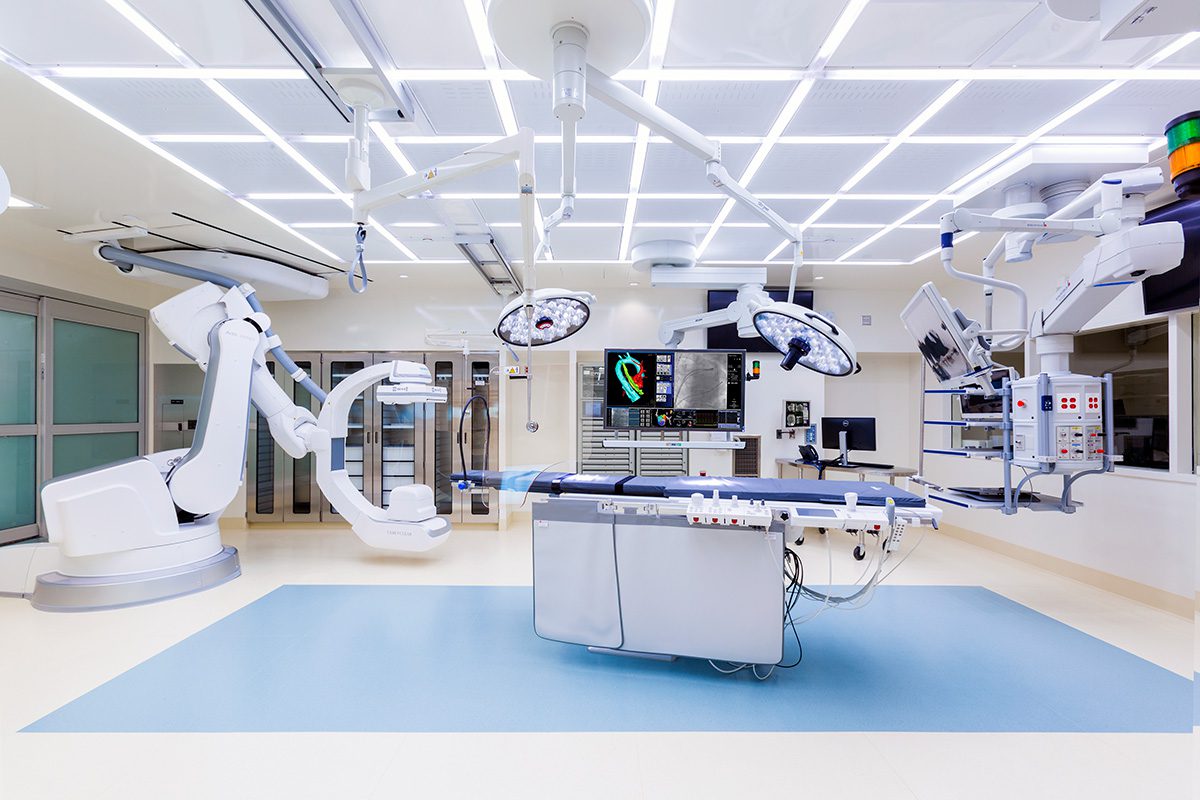
Modern hospitals operate in a constant state of motion. Surgeries are scheduled back-to-back, teams rotate quickly, and downtime is not just inconvenient—it directly impacts patient care and revenue. In this environment, infrastructure decisions must balance performance, flexibility, and speed of deployment.
Modular operating room ceiling system is designed specifically to meet the needs of active hospitals, where upgrades, maintenance, and future adaptability must happen without disrupting ongoing operations.
What Is a Modular Operating Room Ceiling System?
A modular operating room ceiling system is a prefabricated structural and utility framework that integrates lighting, air handling, medical gas, power, and equipment mounting into a unified ceiling solution. Unlike traditional stick-built ceilings, which require extensive on-site construction, modular systems are manufactured off-site in controlled environments and then assembled quickly within the hospital.
This approach allows hospitals to standardize operating rooms while still maintaining flexibility. Each module is engineered to accommodate surgical lights, booms, diffusers, and filtration systems, ensuring that the ceiling is not just a structural element but a fully functional clinical platform.
Why Active Hospitals Need Modular Solutions
Active hospitals cannot afford long construction timelines or unpredictable disruptions. Traditional renovation projects often require shutting down operating rooms for extended periods, which leads to canceled procedures and reduced capacity. Modular ceiling systems address this challenge by significantly shortening installation time and minimizing on-site work.
Because much of the fabrication happens off-site, installation becomes a matter of assembly rather than construction. This reduces noise, dust, and interference with adjacent clinical areas. In many cases, hospitals can phase installations strategically, keeping most operating rooms functional while upgrades are completed in stages.
Speed Without Compromising Quality
Speed is often associated with trade-offs, but modular systems are built to enhance quality rather than compromise it. Controlled manufacturing environments ensure consistent tolerances, better material handling, and rigorous quality checks. This results in a ceiling system that is more precise and reliable than traditional builds.
Additionally, the integration of mechanical, electrical, and medical gas components within a single system reduces coordination errors. Instead of multiple contractors working independently, modular systems are designed holistically, which minimizes conflicts during installation and operation.
Infection Control and Cleanability
Infection prevention is a top priority in any operating room. Modular ceiling systems are designed with smooth surfaces, sealed joints, and integrated airflow solutions that support sterile environments. High-efficiency particulate air (HEPA) filtration and laminar airflow diffusers can be incorporated directly into the ceiling modules, ensuring optimal air distribution over the surgical field.
Because these systems are engineered as cohesive units, they reduce gaps and inconsistencies where contaminants might accumulate. This makes cleaning more effective and helps hospitals maintain strict compliance with infection control standards.
Flexibility for Evolving Clinical Needs
Healthcare technology evolves rapidly, and operating rooms must adapt accordingly. Modular ceiling systems provide a level of flexibility that traditional construction cannot match. Components such as surgical lights, booms, and service panels can be reconfigured or upgraded without requiring a complete overhaul of the ceiling.
This adaptability is especially valuable for hospitals that anticipate growth or changes in surgical specialties. Instead of rebuilding infrastructure, they can modify existing systems to accommodate new equipment or workflows, extending the lifecycle of their investment.
Reduced Downtime and Operational Continuity
One of the most compelling advantages of modular ceiling systems is the ability to maintain operational continuity. Hospitals can schedule installations during off-hours or in carefully planned phases, ensuring that surgical capacity remains largely intact.
This approach not only preserves revenue but also supports patient access to care. In high-demand environments, even a small reduction in downtime can translate into significant operational benefits.
Integration With Modern Surgical Technologies
Today’s operating rooms rely on advanced technologies, from robotic surgery systems to integrated digital imaging and data management platforms. Modular ceiling systems are designed to support these technologies by providing robust mounting structures, cable management, and power distribution.
By centralizing these elements within the ceiling, hospitals can create cleaner, more organized operating rooms. This improves workflow efficiency for surgical teams and reduces the risk of equipment-related complications.
Cost Considerations and Long-Term Value
While modular systems may have a higher upfront cost compared to traditional construction, they often deliver better long-term value. Reduced installation time lowers labor costs and minimizes revenue loss from downtime. Improved quality reduces maintenance needs, and the ability to reconfigure systems extends their useful life.
Hospitals must also consider the hidden costs of traditional construction, such as delays, coordination issues, and disruption to clinical operations. When these factors are accounted for, modular ceiling systems frequently emerge as the more cost-effective solution over time.
Modular vs. Stick-Build Ceiling Systems
To better understand the differences, the table below compares modular operating room ceiling systems with traditional stick-build approaches across key factors that matter most to active hospitals:
| Factor | Modular Ceiling System | Stick-Build Ceiling System |
| Construction Method | Prefabricated off-site, assembled on-site | Built entirely on-site from raw materials |
| Installation Time | Significantly faster; often days to weeks | Longer timelines; often weeks to months |
| Disruption to Hospital | Minimal noise, dust, and downtime | High disruption; may require OR shutdowns |
| Quality Control | High consistency due to controlled manufacturing | Variable; depends on on-site conditions and labor |
| Coordination | Integrated design reduces trade conflicts | Multiple contractors increase coordination risk |
| Infection Control | Sealed, cleanable surfaces with integrated airflow | More joints and gaps; harder to control contamination |
| Flexibility | Easily reconfigurable and upgradable | Difficult and costly to modify after installation |
| Cost Structure | Higher upfront, lower lifecycle cost | Lower upfront, higher long-term cost |
| Downtime Impact | Minimal revenue disruption | Potentially significant revenue loss |
| Technology Integration | Designed for modern surgical systems | Requires retrofitting and adjustments |
Supporting Compliance and Standards
Operating rooms are subject to strict regulatory requirements, including standards for airflow, lighting, and structural support. Modular ceiling systems are typically designed to meet or exceed these standards, simplifying the compliance process for hospitals.
Because these systems are engineered and tested as complete units, they provide a higher level of assurance that all components will work together as intended. This reduces the risk of costly rework and helps hospitals pass inspections more efficiently.
The Future of Operating Room Design
As healthcare systems continue to prioritize efficiency, flexibility, and patient outcomes, modular construction is becoming an increasingly important strategy. Operating room ceiling systems are at the forefront of this shift, transforming from static structures into dynamic platforms that support modern surgical environments.
For active hospitals, the benefits are clear. Modular ceiling systems enable faster upgrades, better infection control, and greater adaptability—all while minimizing disruption to critical operations. As technology advances and clinical demands evolve, these systems will play a central role in shaping the operating rooms of the future.
In a healthcare landscape where every minute counts, investing in a modular operating room ceiling system is not just a construction decision, it is a strategic move toward resilience, efficiency, and long-term performance.
GBHLS is proud to represent AJ Manufacturing for modular OR ceiling solutions. Get in touch today to discuss your potential project needs.